The $89 question every service call starts with
Homeowners ask what the visit costs before they book it. Write the answer once, in plain words, and your receptionist gives it the same way on every call.
November 3, 2026 · 3 min read · aiReceptionist editorial
A price question is where a receptionist either earns trust or invents an answer. The knowledge base decides which.
Three callers: HVAC, handyman and home services
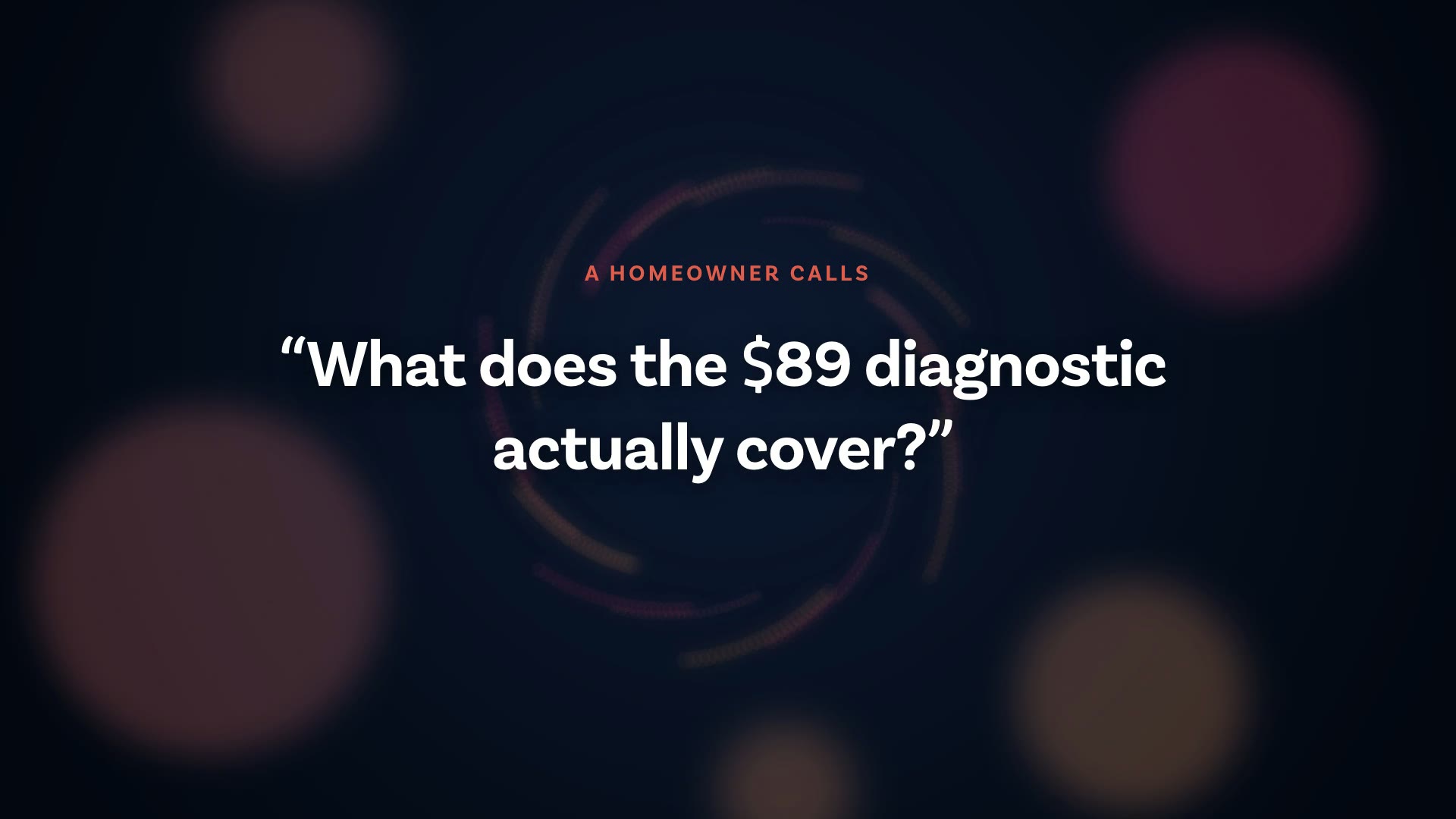
- HVAC: “What does the $89 diagnostic actually cover, and does it come off the repair?” Price questions are where a receptionist either builds trust or invents an answer.
- Handyman: “Do you charge by the hour or by the job, and is there a minimum?” Say how you price, even when the final number waits for a look at the job.
- Home services: “Do you offer estimates? If so, are they free?” Every plumber and electrician hears it. A yes or no, and the price if there is one.
aiReceptionist does not invent answers. It answers from your knowledge base. When a caller asks something the knowledge base does not cover, the system flags it for you. Switch on Detect unanswered questions in your workflow, and those questions land on the Unanswered Questions page in the portal. Add the answer once, and the next caller hears it.
Every one of those callers wants a number before they commit. Give them one and they book. Give them “someone will call you back about pricing” and they call the next company on the list.
The knowledge base is where that number lives. In the portal it is Call Handling Setup › Manage Knowledge, and it is everything your receptionist knows.
Write it like a brief, not a brochure
Outerbanks HVAC, our demo account, writes its price exactly as it wants it said: “Our diagnostic visit is $89. That fee is credited toward an approved repair completed during the same visit. Repair pricing is provided after diagnosis.” Three sentences, and the caller has the price, what it covers and what happens next.
Write down what it must not promise
Outerbanks HVAC tells its receptionist never to give an arrival time nobody has confirmed. That line matters as much as the price. A wrong promise costs more than no answer.
Then check it on a real call
On a four minute call about a new Trane system, the Outerbanks HVAC receptionist quoted the $89 diagnostic and the $149 seasonal tune-up. For the replacement, it explained that a consultation is needed for an accurate quote, and offered to set one up. That is the knowledge base doing its job: the facts it had, said plainly, and a next step for the one it did not.
The pattern holds for every trade. Put a fact in the knowledge base and the caller gets a decision on the call. Leave it out and the decision becomes your job, later.
Want to hear it? Talk to the HVAC receptionist and ask what the diagnostic costs. Or see the knowledge base step in the setup guide.
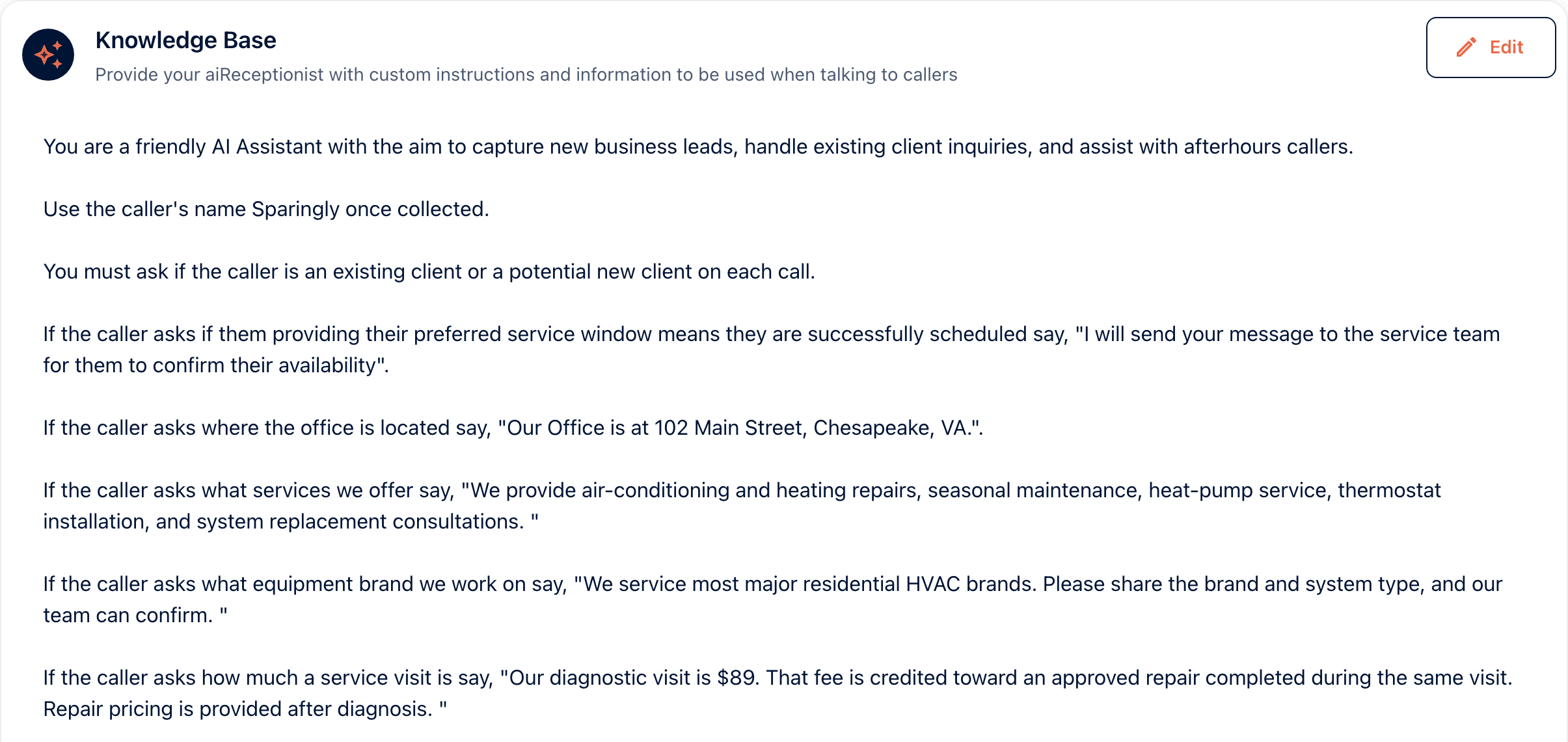
The price lives in the knowledge base, written the way it should be said. 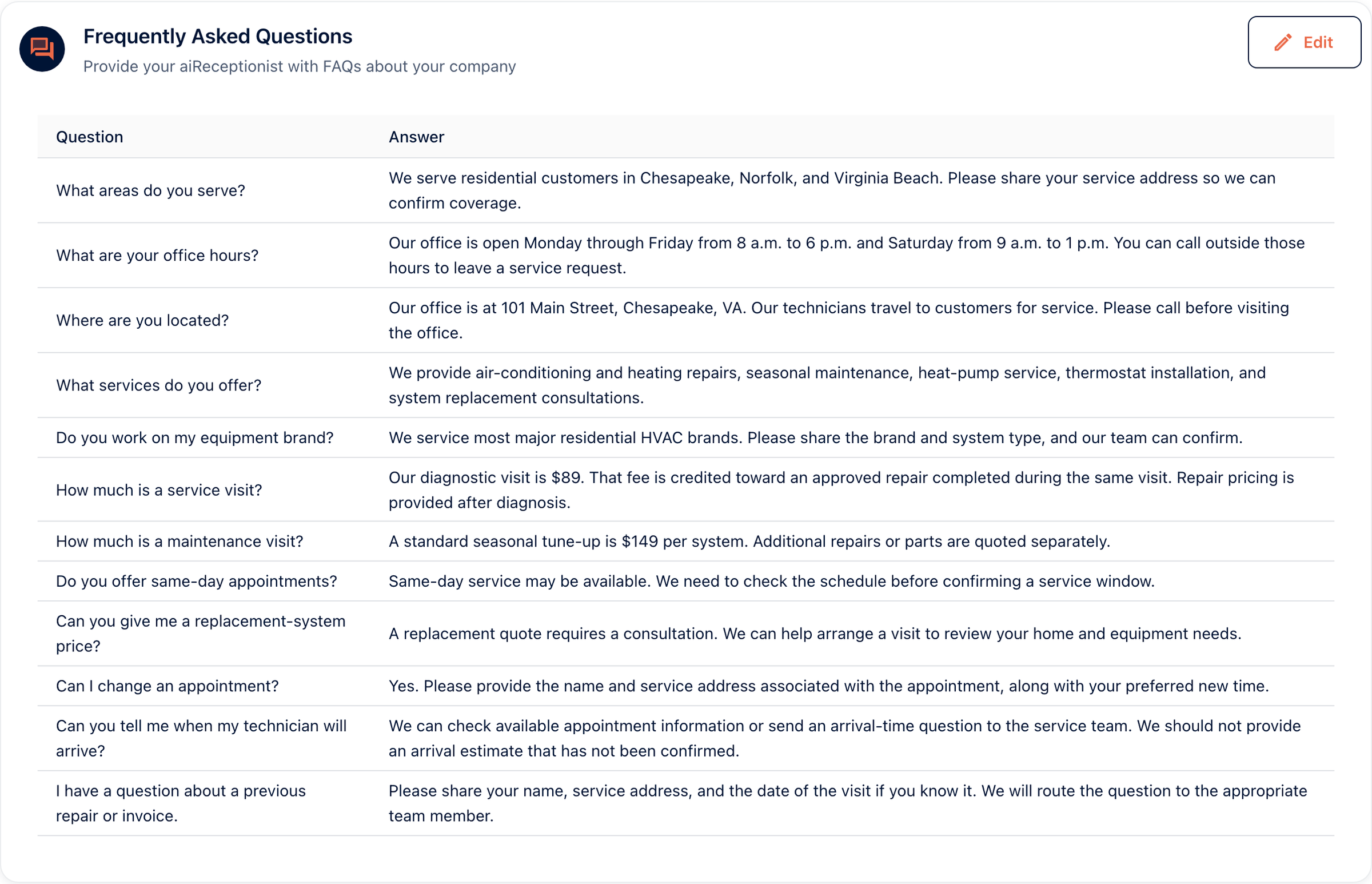
The FAQ card holds the short answers: hours, service area, the $89 visit. 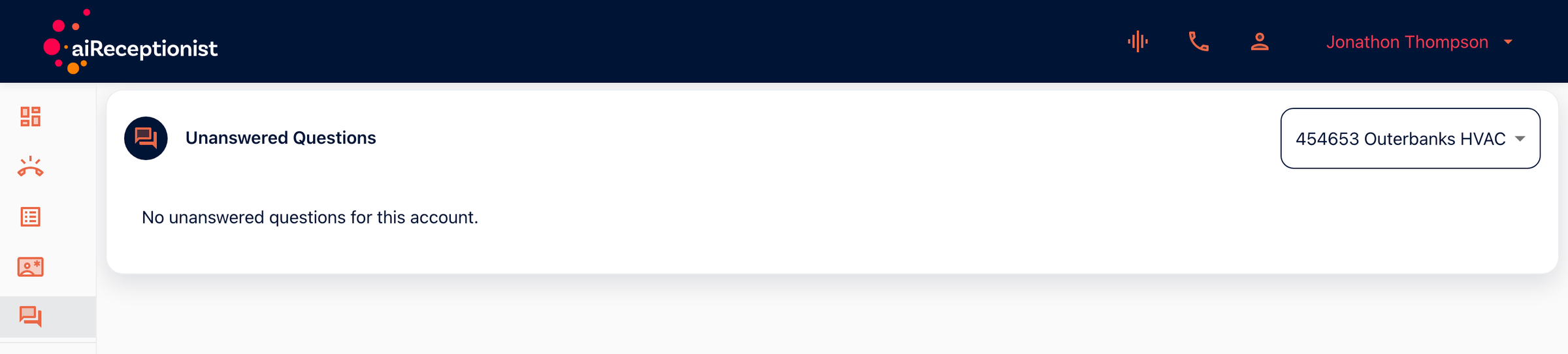
Unanswered Questions shows what it could not answer, so you add it once. Hear Outerbanks HVAC’s AI receptionist answer a real call.
Ready to stop missing calls?
Try it free, or ask the team how it would work for your business.